.svg)
How long does it take to build a custom home?” is one of the most common questions we hear in the...
Multi Generational Homes in the greater Raleigh-Durham Area.
Multi‑generational home design has become increasingly popular in recent years, especially in Raleigh and Durham, where families are looking for smarter ways to live together longer. Rising child care costs, the expense of downsizing, the high price of assisted living, and cultural preferences for keeping multiple generations under one roof all drive this trend. Thoughtful design can make these arrangements comfortable, private, and flexible over time, and there are many ways to integrate multi‑generational living into a new home or remodel.
Separate entries and shared connections
One of the most common strategies is to create a secondary entrance serving a specific portion of the home, such as a finished basement, a first‑floor wing, or a section of the second floor. This allows each generation to come and go without disturbing the rest of the household. At the same time, an interior connection—such as a locking door at a shared hallway, stair, or mudroom—lets the home function as a single unit when desired. This balance of independence and connection is often what makes long‑term multi‑generational living successful.
Good circulation planning is key here. You want to avoid main traffic paths running directly past bedrooms and to make sure entries are well lit, covered, and easy to navigate for older adults. Where possible, align these secondary entries close to parking so residents do not have to cross long distances or climb many stairs just to get inside. In Raleigh’s established neighborhoods or Durham’s compact urban lots, this often means planning creative access points that respect site constraints while maintaining privacy and curb appeal.
Secondary suites and “apartment‑style” spaces
Another popular approach is to include a secondary primary suite. Typically, this suite will have:
- A bedroom sized for a queen or king bed
- A full bathroom, often with a curbless shower and grab‑bar blocking in the walls
- A sitting or living area where the resident can relax, host visitors, or watch TV
In many cases, the sitting area is designed so it can accommodate a small sink and kitchenette—either built out from day one or roughed in behind the walls for a future upgrade. This allows simple meals or snacks to be prepared within the suite, giving the resident a sense of independence without turning the space into a completely separate dwelling. Keeping the kitchenette modest (under‑counter fridge, microwave, sink, a bit of counter space) helps with safety, maintenance, and code considerations.
Planning this in the design phase is critical so plumbing, venting, and electrical are in the right locations and sized appropriately. Even if you do not install the full kitchenette right away, running supply, drain, and dedicated circuits during rough‑in will make a future conversion far easier and much less invasive.
Location within the home also matters. Placing the secondary suite on the main level and relatively close to the main kitchen and common areas offers convenience and reduces the need to navigate stairs—especially important for aging parents or anyone with mobility challenges. At the same time, careful layout can ensure that the rest of the household is not constantly passing through the suite’s “zone” to reach other spaces.
Accessory Dwelling Units (ADUs)
For the greatest separation between generations, an accessory dwelling unit (ADU) is often the best option. An ADU is a smaller, self‑contained residence located on the same lot as the primary home. It can be:
- A detached cottage in the backyard
- A unit built over a garage
- A conversion of an existing structure, where allowed by local code
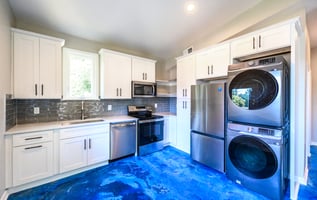
A well‑designed ADU generally includes a small kitchen, stacked washer/dryer, full bath, heating and cooling, closets, and a living/sleeping area (or a separate bedroom and living room, depending on size). Square footage commonly ranges from roughly 400 to 1,000 square feet, though local zoning and lot constraints will drive what’s feasible.
In many setups, the ADU shares water and wastewater connections with the main house but functions day‑to‑day like an independent home. Setback and placement rules vary by jurisdiction, but ADUs are often required to be a minimum distance from the primary structure and property lines, and they may have specific height, parking, and entry requirements.
Beyond housing parents or adult children, ADUs can serve as:
- Guest houses
- Short‑term rentals (where permitted)
- Long‑term rental units that provide additional household income
- Future caregiver housing if assistance is needed later in life
Designing for flexibility across generations
Thoughtful multi‑generational home design is about more than squeezing extra bedrooms into a floor plan; it’s about creating a home that can flex with your family through every season of life. By planning for separate entries where appropriate, well‑equipped secondary suites, or even a full ADU, you give each generation the ability to live together while still maintaining privacy, dignity, and independence.
When these ideas are considered early—alongside accessibility, circulation, and future‑proofed rough‑ins—you end up with a property that not only works today but can gracefully adapt as needs change. In the fast‑growing housing markets of Raleigh and Durham, multi‑generational design is one of the most powerful tools we have to build homes that truly serve the people who live in them.